Book a long way in advance if you wish to do either of these treks as they are hugely popular and there are only limited number of permits issues for each day
The Choquequirao trek is a spectacular 60 km trek that will lead you to one of the last refuges of the Incas. Choquequirao, located at 3,100 metres is a huge archaeological complex still under excavation today and is located amongst the Salkantay sacred mountain and the Apurimac River canyon. This is a walk where you will find amazing mountain scenery as well as a diverse range of Andean flora and fauna.
The Colca Canyon is reputedly the deepest in the world – 3,182 metres (11,000 feet), which is twice as deep as the Grand Canyon. The region is also known for its terracing, thought to be the most extensive in Peru, its picturesque towns, where the traditional clothing is still worn by the majority of women and the spectacular mountain scenery with snow-capped Andean peaks.
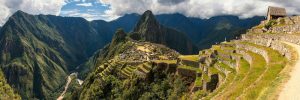
For many this is the main reason to make the pilgrimage to Peru. Situated on a single mountain high in the Andes (2450m) this archaeological site was never discovered by the Spanish. Situated 120km northwest of Cuzco it is only accessible by train and foot. The archaeologist Hiram Bingham discovered Machu Picchu in 1911, although archaeologists have been visiting it for years its purpose is still unclear.
The trip to Machu Picchu can be done several different ways. One of the most popular and spectacular is the Inca Trail. You traverse the Andes, passing archaeological ruins, rivers, terraced valleys, snow-capped peaks, cloud forest, and a wide array of flora (including numerous varieties of orchid) and bird life. Not only is this a good walk, but it also allows you to get a better understanding of the Inca world en-route to Machu Picchu.
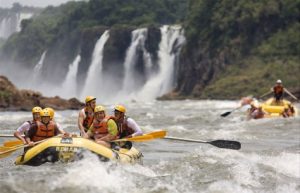
The Sacred Valley is a short drive from Cuzco and good place to help acclimatise to the altitude as it is lower than the Inca Capital. The Sacred Valley contains fertile valleys, White Water Rivers, colourful markets and hiking trails, making it a superb destination for both cultural and active interests.
The Salkantay Trek has been named among the 25 best Treks in the World and unlike the Inca Trail it is open to everybody, with no limitation on spaces or permits. You will trek from 3,900m/12,800ft to 2,100m/6,900ft, traversing across magnificent mountain passes, enjoying enormous and mystical snow-capped peaks, seeing nature in its purest form and exploring more than 15 different ecosystems from beginning to end.



,
