Arequipa is a UNESCO world heritage site, overlooked by the conical El Misti volcano. It does justice to its nickname, the ‘white city’, as its buildings consist of ‘sillar’, a white volcanic rock that embellishes the facades of the city’s homes and churches. The town of Arequipa is situated at around 2500 metres, making this an ideal stop over between Lima and Cuzco, allowing you to acclimatise slowly to altitude.
The Colca Canyon is reputedly the deepest in the world – 3,182 metres (11,000 feet), which is twice as deep as the Grand Canyon. The region is also known for its terracing, thought to be the most extensive in Peru, its picturesque towns, where the traditional clothing is still worn by the majority of women and the spectacular mountain scenery with snow-capped Andean peaks.
Cuzco in Quechua means ‘Navel of the earth’ and was the capital of the Inca Empire. The city has a curious character, its narrow cobbled streets and friendly people are obvious, but it is the huge walls of intricately laid stone that pay testimony to the civilisation that 500 years ago controlled most of the continent and today characterise Cuzco.
Located in eastern Peru on the high plateau or ‘Altiplano’, are the shores of Lake Titicaca, close to the Bolivian border. The Altiplano has an average altitude of 4,000 metres, which makes the lake, at a size of 8,300 sq km, the highest navigable lake in the world. The small town of Puno is full of Peruvian character, with narrow dusty streets and a colourful market.
The Amazon River is the longest, widest river, with the greatest volume of water, in the world. Forming part of Brazil’s mighty Amazon basin, Peru’s Amazonia is a maze of waterways and lagoons. The source of the Amazon lies in the Peruvian Andes, where it has a journey of some 6,762 km to the mouth of the Atlantic Ocean, where fresh water can still be tasted 100 km out to sea!
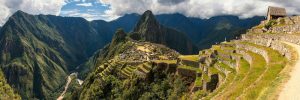
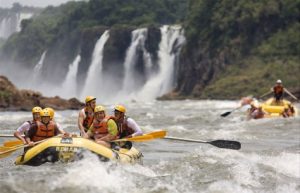
The Sacred Valley is a short drive from Cuzco and good place to help acclimatise to the altitude as it is lower than the Inca Capital. The Sacred Valley contains fertile valleys, White Water Rivers, colourful markets and hiking trails, making it a superb destination for both cultural and active interests.



,
